Let’s be completely honest about the state of gig work in America right now. If you open your phone and search for “flexible side hustles,” the internet will immediately point you toward the exact same three options: driving passengers around your city, delivering fast-food bags to front porches, or grocery shopping for strangers.
I spent the last few months tracking real economic data and talking to independent service operators across the country. What I found was a massive shift in how smart people are approaching gig work USA. Instead of competing on corporate apps where your income is capped by an automated system, the highest paying gig economy jobs right now are independent, hyper-local micro-businesses.
If you want to step away from the corporate app trap and build a highly profitable, flexible local business, these are the best local side hustles that are working across America.
High-End Mobile Detailing and Eco-Washing Networks
What is this side hustle?
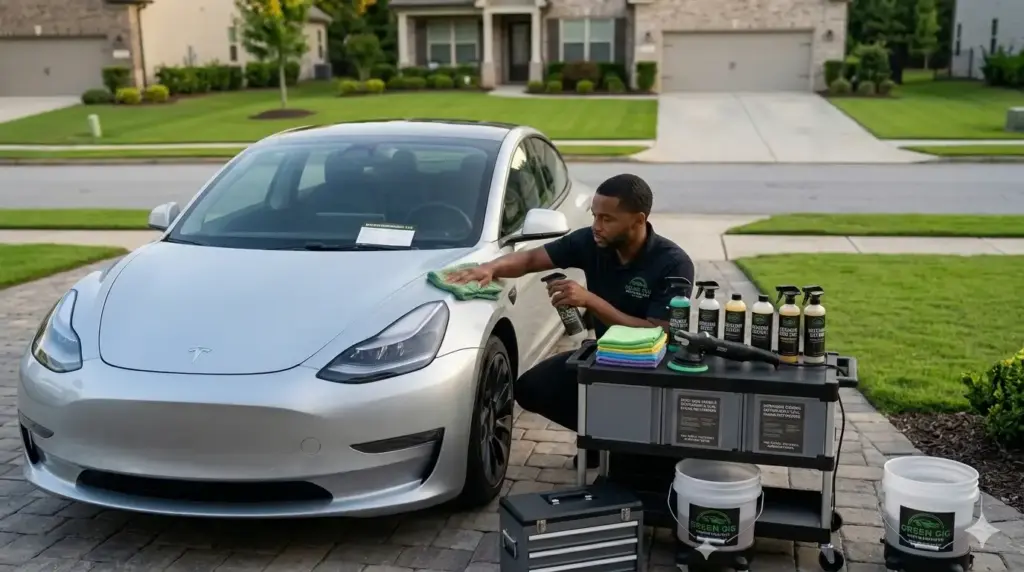
Mobile detailing involves traveling directly to a client’s home or workplace to clean, restore, and polish their vehicle on-site. Instead of setting up a traditional brick-and-mortar car wash, you operate entirely out of your trunk or an SUV, bringing your own specialized tools, microfiber kits, and high-efficiency cleaning solutions directly to the customer’s driveway.
Why is it trending in the US?
The average price of a new car in the United States has stayed incredibly high, forcing Americans to keep their current vehicles longer. Because cars are a massive investment, people want to protect their resale value. Concurrently, high-earning hybrid and remote workers don’t want to spend their Saturday mornings waiting in line at a traditional, automated car wash that scratches their paint. They value convenience. By offering a premium service that happens while they are working from home, you capture a customer base that prioritizes time savings over low prices.
Real-life scenario
I spent some time studying local neighborhood service setups in suburban areas outside of Atlanta. I met a guy named Marcus who works a normal corporate job Tuesday through Thursday. On Mondays and Fridays, he operates a premium mobile detailing setup. Instead of chasing cheap one-time washes, he markets exclusively to dual-income households via neighborhood apps. He charges a flat $150 for an interior and exterior deep clean. He told me his entire business turned the corner when he introduced a “Monthly Maintenance Subscription.” Now, 15 clients pay him $100 a month to come out bi-weekly for a quick maintenance wipe-down. He locked in predictable recurring revenue using nothing but a shop-vac and a clean marketing angle.
How much can someone realistically earn?
- Per Car Rate: $120 to $300+ depending on the package (basic clean vs. paint correction/ceramic coating).
- Monthly Income Potential: $1,800 to $4,500/month working strictly on weekends or select weekdays.
How a beginner can start
- Invest in a Quality Starter Kit: You do not need an expensive trailer setup to start. Buy a high-powered shop vacuum, a portable extraction machine for carpets, a set of high-quality microfiber towels, and premium detailing chemicals (total investment under $400).
- Practice on Personal Vehicles: Detail your own car, your family’s cars, and your friends’ cars. Take crisp, high-resolution before-and-after photos of the wheels, dashboards, and stained carpets.
- Set Up a Simple Booking Link: Use a free scheduling tool like Calendly or Square Appointments so clients can pick a time slot without a long back-and-forth text chain.
- Target Neighborhood Marketplaces: Post your before-and-after transformations on Nextdoor and local Facebook Groups. Offer a “First-Time Neighborhood Special” to secure your first three reviews.
Pros and challenges
- Pros: Low startup costs; instant cash flow; exceptional scalability through monthly maintenance subscriptions.
- Challenges: Physically demanding labor; highly dependent on local weather conditions; requires managing customer expectations regarding deep scratch removal.
Private Yard Sharing and Pet Event Hosting
What is this side hustle?
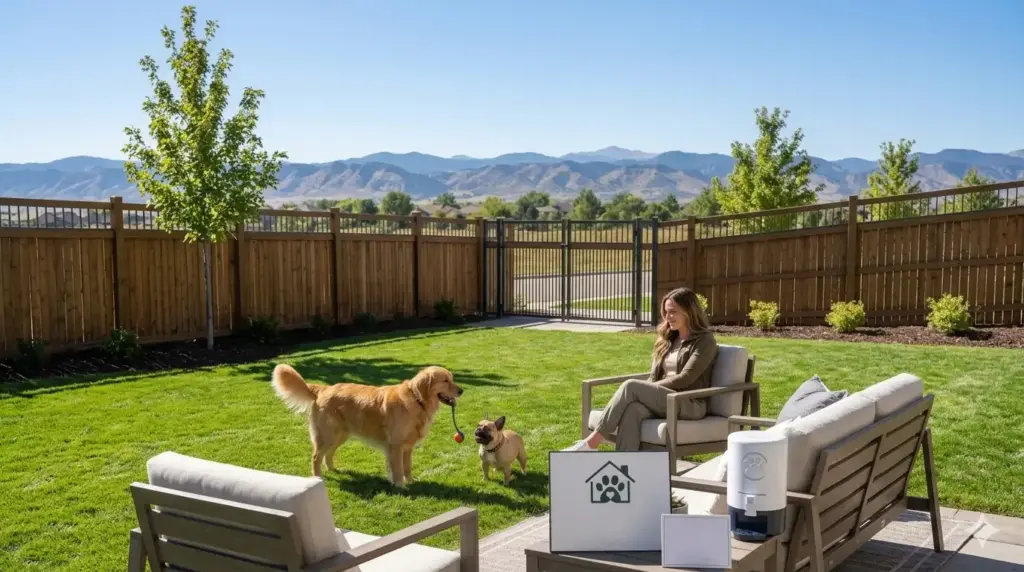
This hustle leverages the massive pet care industry by renting out your private backyard, acreage, or outdoor space to dog owners by the hour. Using dedicated peer-to-peer marketplaces like Sniffspot, or by marketing locally, homeowners turn their properties into secure, private dog parks for owners who want a safe space for their pets to run without the chaos of public dog parks.
Why is it trending in the US?
Pet ownership across the United States has reached historic highs over the last few years. Millions of suburban and urban households view their dogs exactly like family members. However, public dog parks can be highly stressful environments, frequently plagued by untrained dogs, safety hazards, and disease transmission risks. Owners of reactive dogs, rescue animals, or highly active breeds are constantly searching for private, fenced spaces where their dogs can fetch in peace. If you have a decent-sized, securely fenced yard, you are sitting on highly valuable digital real estate that requires zero physical labor to monetize.
Real-life scenario
I kept a close eye on alternative property monetization strategies and found a fascinating example in a quiet residential neighborhood outside Denver. I connected with a homeowner named Clara who has a half-acre backyard that she rarely used. She installed a clean double-gate security entryway, placed a couple of lawn chairs under a shade tree, set out a clean water bowl, and listed her yard on a pet space platform for $15 an hour for up to two dogs. Within six months, local dog agility trainers and reactive dog owners filled her calendar. She regularly books out 25 to 30 hours a week. She doesn’t even have to interact with the guests; they use a secure side gate, while she collects an extra $1,800 a month just for keeping her lawn mowed.
How much can someone realistically earn?
- Hourly Rate: $12 to $25/hour per dog.
- Monthly Income Potential: $800 to $2,500/month of highly automated, passive income from your existing property.
How a beginner can start
- Secure Your Perimeter: Ensure your fencing is completely secure with no gaps, loose boards, or low points where a dog could escape.
- Add Pet Amenities: Place a clean trash can dedicated to pet waste, provide free bio-degradable waste bags, put out a fresh water bowl, and add a simple seating area for the owners.
- Take Clean Strategic Photos: Photograph your yard on a bright, sunny day. Show the full perimeter of the fence so owners can verify that the space is entirely enclosed and safe.
- List on Niche Marketplaces: Create a descriptive profile on Sniffspot and promote your private yard within local dog-owner communities, rescue groups, and veterinary clinic bullet boards.
Pros and challenges
- Pros: Near-total passive income; incredibly low ongoing maintenance; highly flexible scheduling control.
- Challenges: Requires owning or renting a property with a secure yard; potential for lawn damage/wear from active dogs; requires maintaining strict cleanliness and waste-removal standards.
Real Estate Media and Local Drone Photography Packages

What is this side hustle?
This side hustle focuses on providing high-resolution listing photography, walkthrough video tours, and aerial drone footage for local real estate agents, commercial property managers, and independent Airbnb hosts who need professional visuals to market their properties online.
Why is it trending in the US?
The US real estate market is highly competitive, and home buyers conduct nearly all of their initial shopping online via platforms like Zillow, Redfin, and Realtor.com. Standard, low-quality smartphone photos taken by an agent don’t cut it anymore. Listings that feature crisp, wide-angle interior shots paired with dynamic aerial drone footage sell significantly faster and for higher prices. Furthermore, the commercial space and luxury vacation rental market (Airbnb/VRBO) is booming, meaning property owners are highly willing to spend $300 to $600 for a media package that makes their property stand out in crowded search feeds.
Real-life scenario
I spent some time looking into how independent media creators break into local corporate spaces. I talked to a 24-year-old remote IT worker in Phoenix named Jordan. He bought a standard, entry-level drone and a clean mirrorless camera setup during a holiday sale. Over three weekends, he studied real estate photography composition on YouTube. He approached a local real estate agent who had an older listing that was sitting stagnant on the market with poor photos. Jordan offered to shoot a full interior and exterior package, including aerial property map lines, for free just to build his portfolio. The agent was so impressed by the fast turnaround that she hired him for all her upcoming listings at a flat rate of $350 per house. He now manages 3 listings a week on his Friday afternoons and Saturdays, completely funding his lifestyle expenses outside his main salary.
How much can someone realistically earn?
- Per Package Rate: $250 to $600 per residential listing shoot depending on property square footage and drone inclusion.
- Monthly Income Potential: $2,000 to $5,000/month operating as a part-time solo contractor.
How a beginner can start
- Obtain Your Part 107 License: If you fly a drone for any business purpose in the United States, the FAA requires you to pass the Part 107 commercial drone pilot exam. Spend 15 hours studying via free online study guides to clear this simple test.
- Secure Standard Equipment: You need a dependable camera body with a wide-angle lens (perfect for making rooms look spacious) and a standard drone like the DJI Mini series, which offers exceptional 4K video capabilities at a consumer price point.
- Build a Sample Portfolio: Shoot the interior and exterior of your own home, an apartment, or a friend’s house. Edit the images to ensure clean vertical lines and bright, natural windows.
- Reach Out to Emerging Agents: Don’t target the top 1% real estate executives right away. Find newer agents who are actively trying to build their listings and pitch them a high-value, fast-turnaround entry media package.
Pros and challenges
- Pros: High hourly earning equivalent; high-margin creative output; builds deep business connections with real estate networks.
- Challenges: Upfront equipment acquisition expenses; requires passing an FAA licensing test; requires learning basic photo editing and color correction software.
Frequently Asked Questions
Do I need special business insurance to run a local side hustle?
If you are operating a physical service business where you enter client homes or handle their high-value personal assets—such as mobile detailing, real estate photography, or micro-moving—you should secure a basic General Liability Insurance policy. In the United States, a starter commercial liability policy protecting up to $1 million in accidental damages usually costs between $30 and $50 a month through providers like Next Insurance or Thimble. Having proof of insurance instantly separates you from casual hobbyists and allows you to charge premium corporate rates.
How do I accurately price my local services against larger corporate competitors?
Do not try to be the cheapest provider in your local market. Lowering your prices to win jobs triggers a race to the bottom that destroys your profit margins after accounting for taxes, fuel, and supplies. Instead, price your services based on value, convenience, and direct specialization. Corporate providers are often rigid, slow-moving, and impersonal. Position your local gig business around premium communication, fast turnaround times, and personalized customer care, and set your rates at or slightly above the regional market baseline.
What is the most effective way to market a local side hustle without spending money on ads?
The single most powerful free marketing engine for local services in the USA is Nextdoor paired with Local Facebook Groups. Homeowners trust local recommendations far more than sponsored Google ads. Post authentic, helpful introductions explaining who you are, share high-contrast before-and-after visual transformations of your work, and explicitly state that you are a local independent operator looking to serve a few neighbors this weekend. Once you complete a job, ask your client to drop an honest review on your profile—local reviews create a compounding trust loop that generates free organic inbound leads for months.
Final Takeaway
The ultimate secret to winning the local gig economy is recognizing that real financial freedom lies in ownership. When you log onto an app, you are a line item in a corporate algorithm that takes a massive cut of your labor. When you step out into your community as an independent service provider, you keep 100% of the value you create.
Don’t let the planning phase stall your progress. Select one single local hustle from this guide that matches your current lifestyle assets, physical capabilities, and local neighborhood demographics. Commit to securing your first three clients using free organic platforms, gather their reviews, refine your operational systems, and build an asset that gives you real financial options outside your traditional day job.